Hazardous & Dead Tree Removal in Austin, TX
Safe, non-climbing aerial dismantling of brittle standing dead trees, hypoxylon-infected oaks, and severely leaning hazard trees before catastrophic failure.
Recognizing Structural Tree Mortality: Hypoxylon Lesions & Canopy Dieback
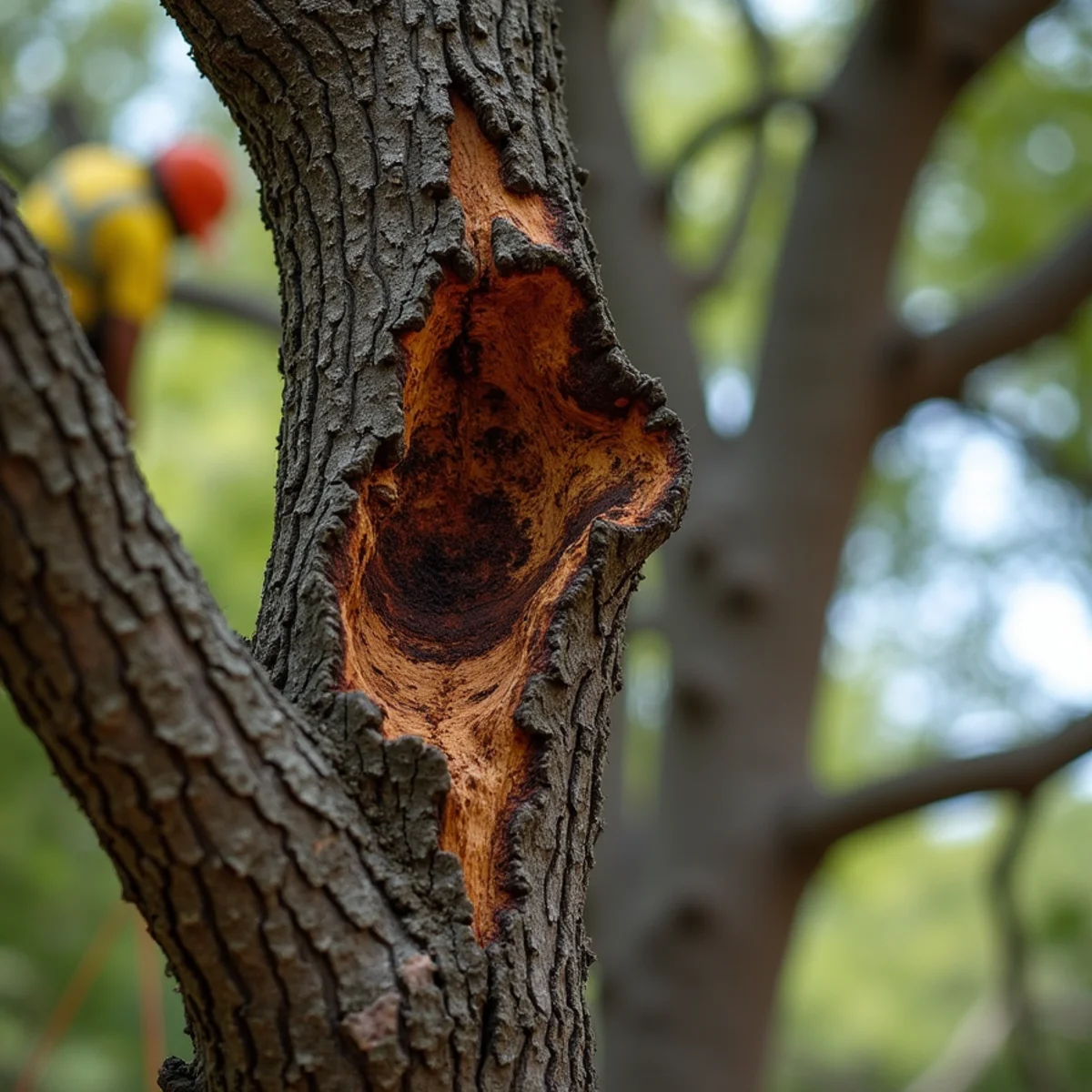
Identifying when a standing tree has crossed from seasonal dormancy into irreversible mortality is vital for property safety across Greater Austin. While deciduous hardwoods lose leaves in autumn, a dead live oak (Quercus virginiana) or cedar elm (Ulmus crassifolia) displays distinct structural decay indicators that signal immediate mechanical failure risks.
Key symptoms demanding dead tree removal austin include complete absence of leaf buds during spring flush, extensive bark peeling exposing brittle sapwood, deep trunk fissures, and silver-gray or tar-black crusty fungal mats caused by Hypoxylon canker (Biscogniauxia atropunctata). When woodpeckers aggressively drill deep into main stems, they are targeting wood-boring beetle larvae inhabiting hollow, rotting heartwood that can no longer withstand Central Texas wind gusts.
Need Professional Hazardous & Dead Tree Removal in Austin?
Our certified arborist crew provides free on-site inspections and upfront itemized quotes. Call (858) 780-5212.
Environmental Failure Triggers: Central Texas Drought & Vascular Oak Wilt
The prevalence of hazardous dead timber across the Austin metropolitan area stems from brutal ecological cycles. Prolonged summer heatwaves with triple-digit temperatures desiccate shallow topsoils, especially over Hill Country limestone karst west of Mopac in West Lake Hills, Rollingwood, and Bee Cave. Moisture-starved root systems cannot transport water, triggering rapid canopy decline.
In east Travis and Williamson counties, vascular oak wilt (Ceratocystis fagacearum) spreads rapidly through interconnected red oak and live oak root systems, shutting down water transport within weeks. Once trees succumb to wilt or drought, secondary fungal pathogens rot trunk collars. When saturated winter rains soften heavy Houston Black clay soils, these top-heavy dead trees collapse under their own deadweight.
No-Climb Aerial Lift & Crane Dismantling for Brittle Dead Wood
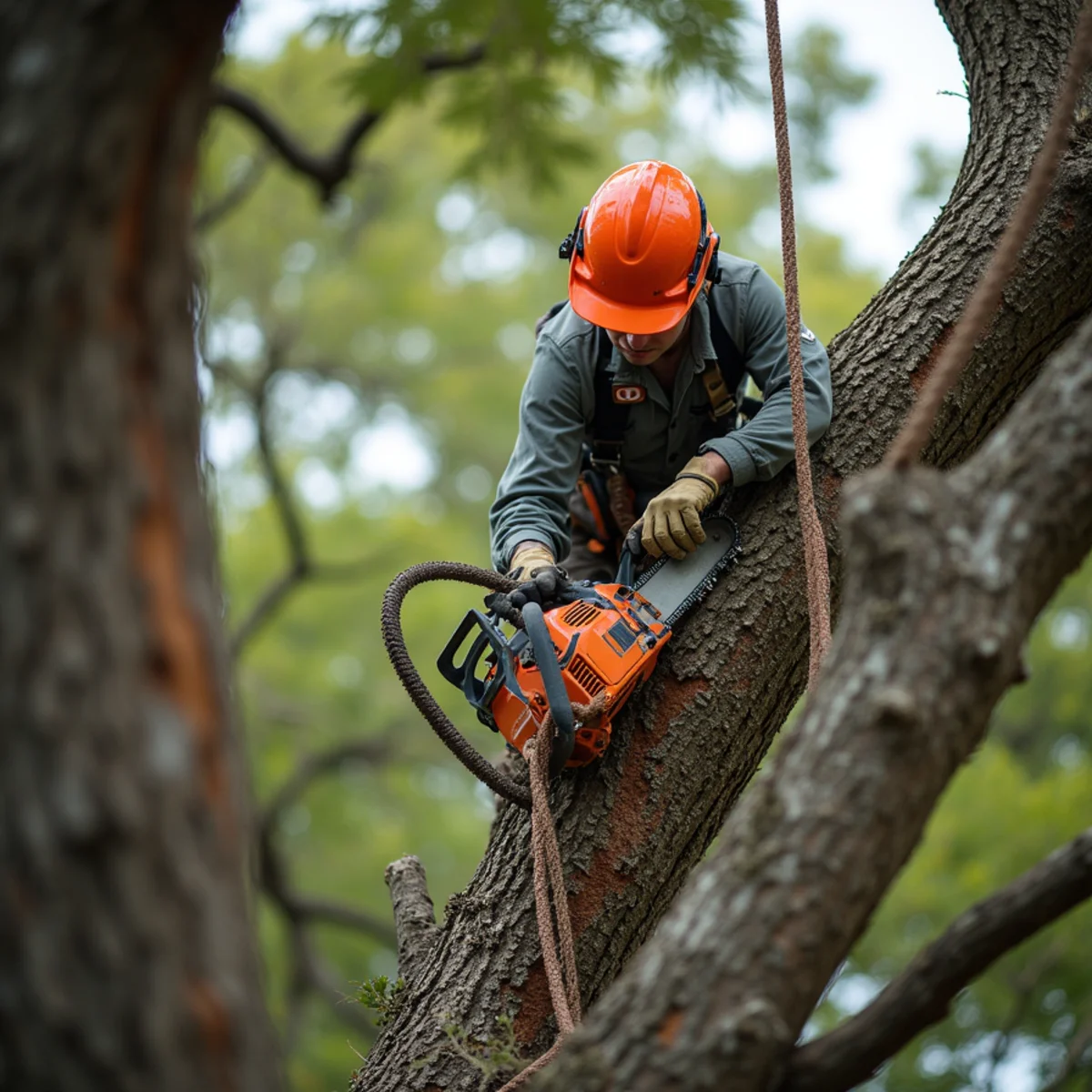
Dismantling a dead hardwood requires fundamentally different engineering than removing a living tree. Dead wood loses internal cell elasticity, becoming extremely brittle. Traditional arborists who spike and climb dead stems risk structural snapping of tie-in limbs or sudden trunk fracture under human weight.
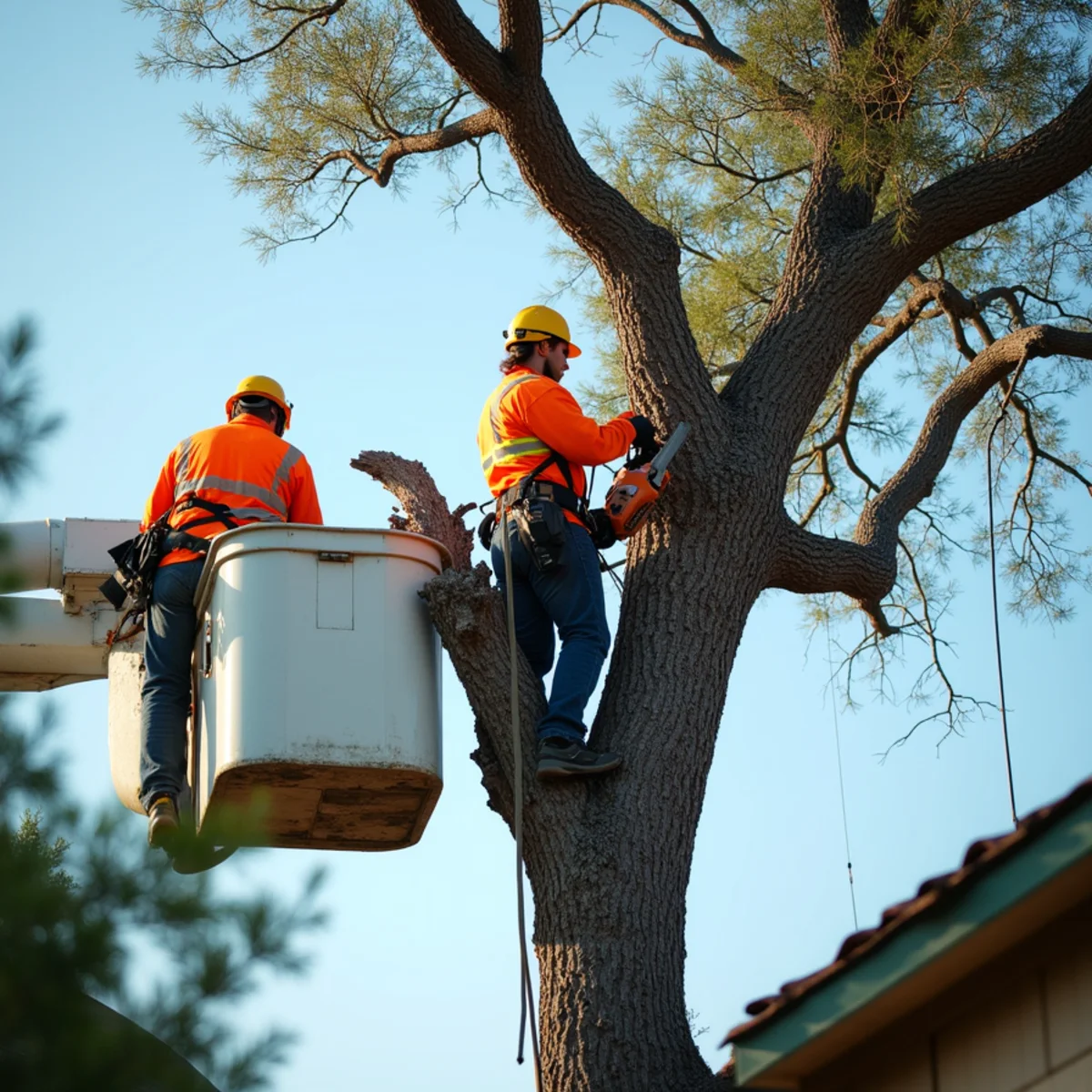
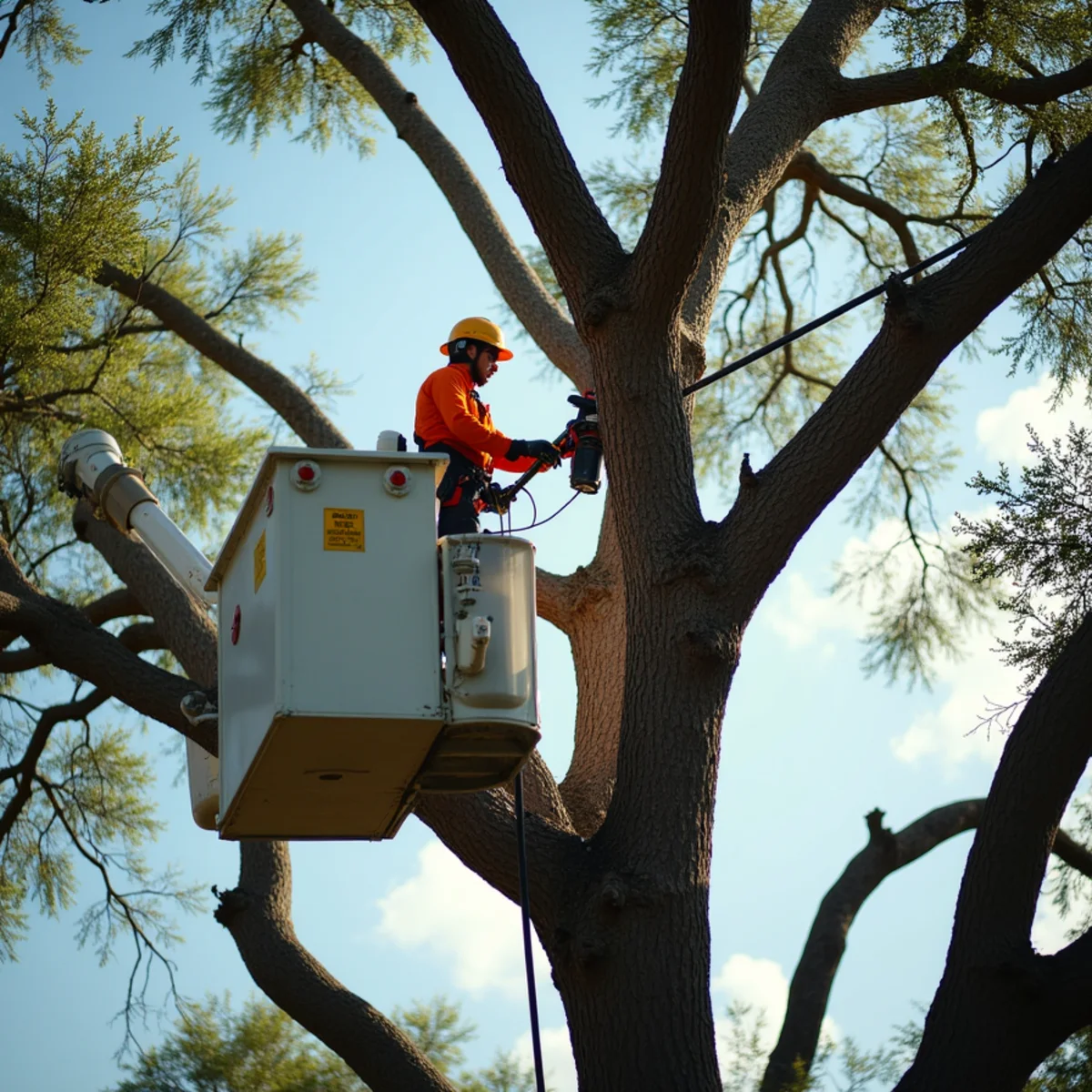
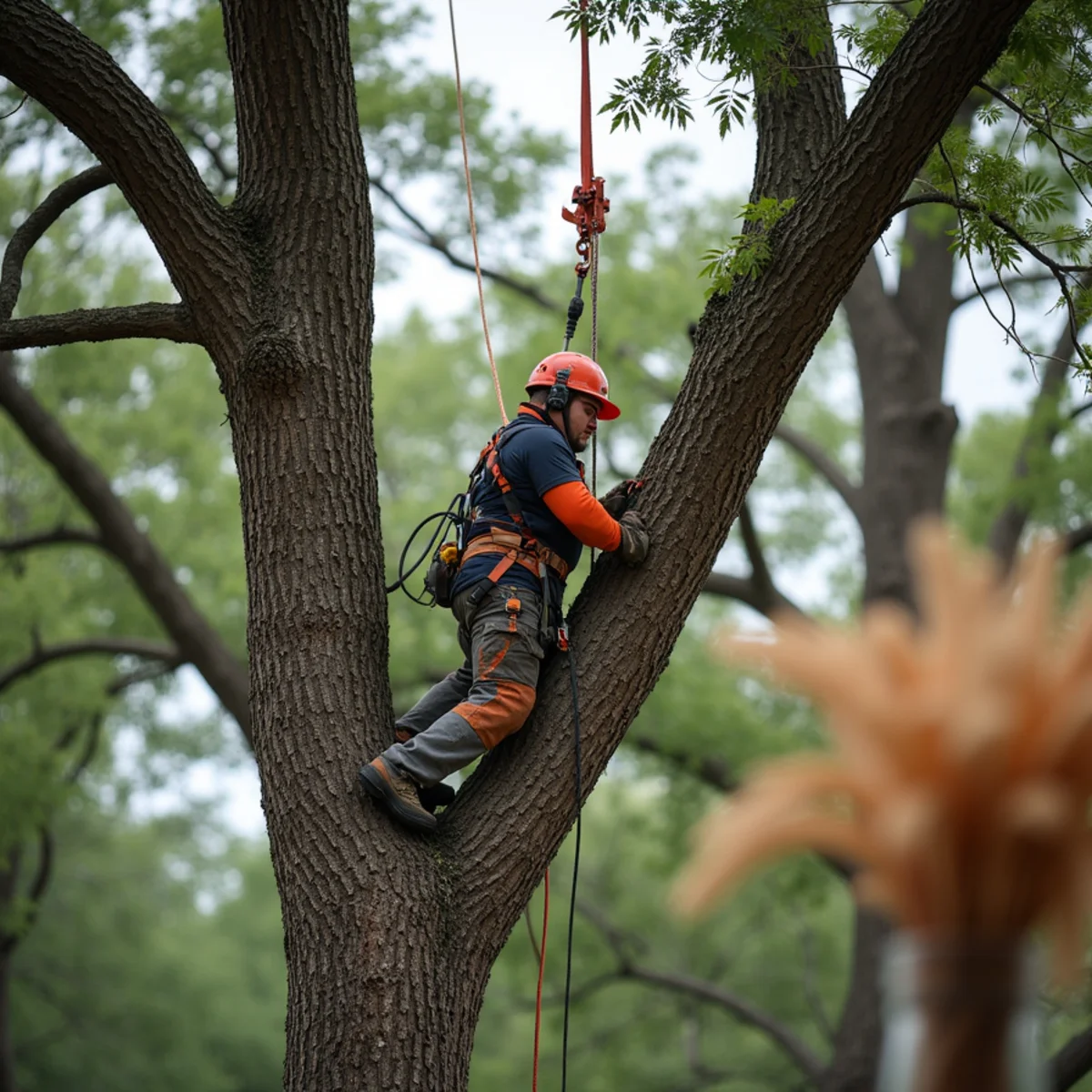
Stump Bros utilizes strict no-climb protocols on structurally compromised trees. We position aerial bucket units or 50-ton mobile cranes above the canopy, allowing technicians to rig and sever branches from stabilized aerial platforms without placing dynamic loads on the tree. Synthetic rigging slings cradle individual dead limbs, lowering them smoothly into designated landing zones without ground impact.
What Is Included: Complete Dead & Hazardous Tree Removal Deliverables
Our dead and hazardous tree removal service provides complete turnkey hazard mitigation:
Step-by-Step Controlled Dismantling Protocol for Dead Trees
We execute high-hazard dead tree removals through a disciplined five-step safety protocol:
Drop-Zone Quarantine & Ground Protection
Establish an exclusion perimeter around the impact zone, verify Austin Energy electrical clearances, and lay composite ground mats.
Aerial Canopy Reduction
Operators in aerial lifts systematically remove brittle outer branches using small, non-reactive cuts to eliminate leverage weight.
Controlled Crane or Rigging Picks
Secure heavy lateral limbs with synthetic chokers, tensioning rigging blocks before making clean severance cuts.
Trunk Stem Sectioning
Dismantle the main standing trunk in manageable vertical blocks, lowering each section under controlled friction braking.
Debris Hauling & Grounds Restoration
Process wood, haul logs, perform detailed raking and blower cleanup, and verify site safety.
Variables Influencing Dead Tree Removal Scope & Equipment
Every hazardous dead tree scenario requires custom equipment configuration. Key scope variables include:
Why Austin Property Owners Depend on Stump Bros for High-Hazard Removals
When taking down a structurally dangerous dead tree, experience and specialized machinery are non-negotiable:
City of Austin Dead Tree Permitting Exemptions & Liability Statutes
Under the City of Austin Land Development Code Title 25-8, native protected trees measuring 19 inches or greater DBH typically require tree removal permits. However, dead trees qualify for expedited administrative approval upon submitting photo documentation and certified arborist confirmation of 100% mortality. Stump Bros handles all permit filing on your behalf.
Furthermore, under Texas property statutes, maintaining a visibly dead tree creates substantial legal liability. If a property owner is notified of an open structural hazard and fails to remediate it, subsequent storm damage to a neighbor's property is legally classified as negligence, nullifying 'Act of God' insurance defenses.
High-Risk Tree Removal Across Austin, Williamson & Travis Counties
Stump Bros removes hazardous and dead trees across Central Texas. In western Travis County, we serve [West Lake Hills](/service-areas/west-lake-hills-tx/), [Rollingwood](/service-areas/rollingwood-tx/), and [Bee Cave](/service-areas/bee-cave-tx/). In northern communities, our crews provide rapid hazard mitigation across [Round Rock](/service-areas/round-rock-tx/), [Pflugerville](/service-areas/pflugerville-tx/), and [Cedar Park](/service-areas/cedar-park-tx/).
In south and eastern Travis County, we clear dangerous hardwoods throughout [Buda](/service-areas/buda-tx/), [Del Valle](/service-areas/del-valle-tx/), and [Manor](/service-areas/manor-tx/). Our aerial crews ensure safe dismantling in even the tightest residential yards.
Frequently Asked Questions About Hazardous & Dead Tree Removal
Clear, honest answers regarding tree health, emergency storm triage, permits, and pricing.
We perform a cambium scratch test and canopy bud examination. Scratching through the outer bark on multiple branches reveals bright green, moist cambium on living tissue, whereas dead wood displays dry, brown, or brittle gray layers. Additionally, sheet-like bark peeling, fungal conks at the trunk flare, and zero leaf bud development during spring indicate irreversible tree mortality.
Verified Client Reviews for Hazardous & Dead Tree Removal
See what Austin homeowners and commercial managers say about our hazardous & dead tree removal safety, precision, and cleanup.
Mark McIntyre
“Luis, knocked on the door. I wasn't looking, but he told me what he could do to get rid of partially ground stumps when I had the trees taken down. He had the right equipment and impressed me. I am a pretty good judge of character and was right about him...he is a hard worker. They ground 2 stumps for me, did a great job and I highly recommend them. His card says: Stump Grinding, Tree Removal and Lot clearing.”
Jeff Echols
“They did a stellar job on landscaping my back yard. I had some areas that I disliked mowing and they turned it into a beautiful xeroscaped area. They did the job on budget and on time. I am very impressed with there knowledge of landscaping.”
Kelly Dodd
“They stopped by while they were in the neighborhood and did three stumps for me. It looks great! They were quick, professional, and hardworking in this heat.”
BBB Accredited Business with A+ Rating
Accredited by the Better Business Bureau since May 2025. Verified licensing, zero complaints, and $2M liability protection.
Schedule Your Hazardous & Dead Tree Removal Inspection Today
Call (858) 780-5212 to speak directly with our Austin dispatch team. We schedule promptly and provide transparent written pricing.